A Beautifully Illustrated, USDA-Tested Guide

The Preserved
Pantry Manual

Canning, dehydrating, freeze drying, fermenting, and long-term storage — every method, every processing time, cross-checked against USDA and NCHFP guidance.

34Chapters
80Photographs
221Pages
38Printables
Instant PDF download · readable on any device
80 Photos
Inside
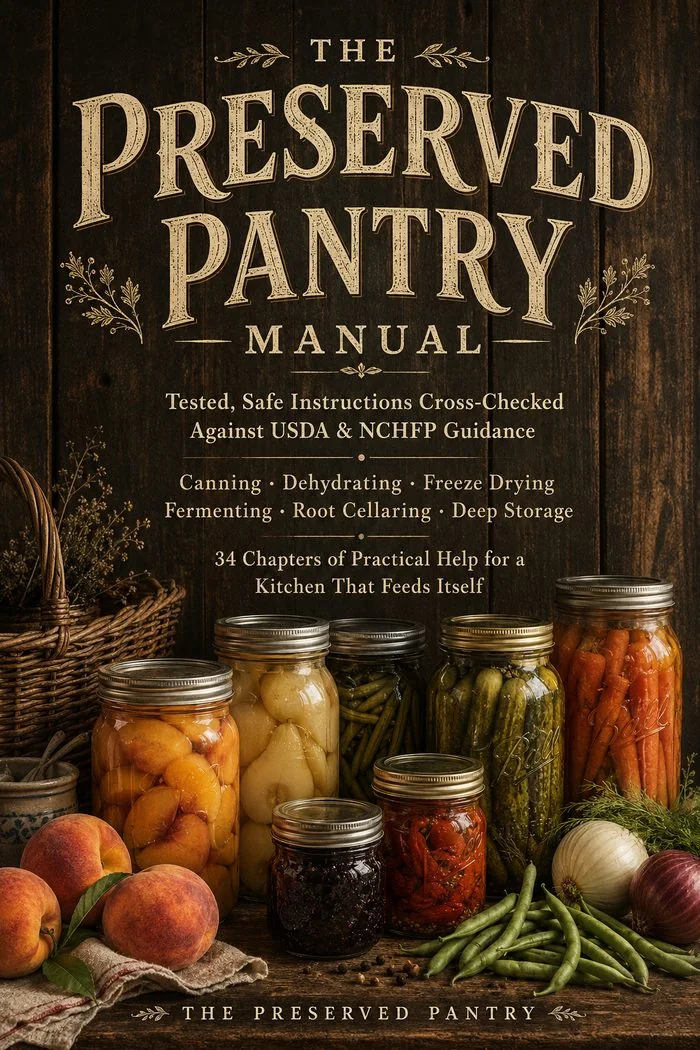
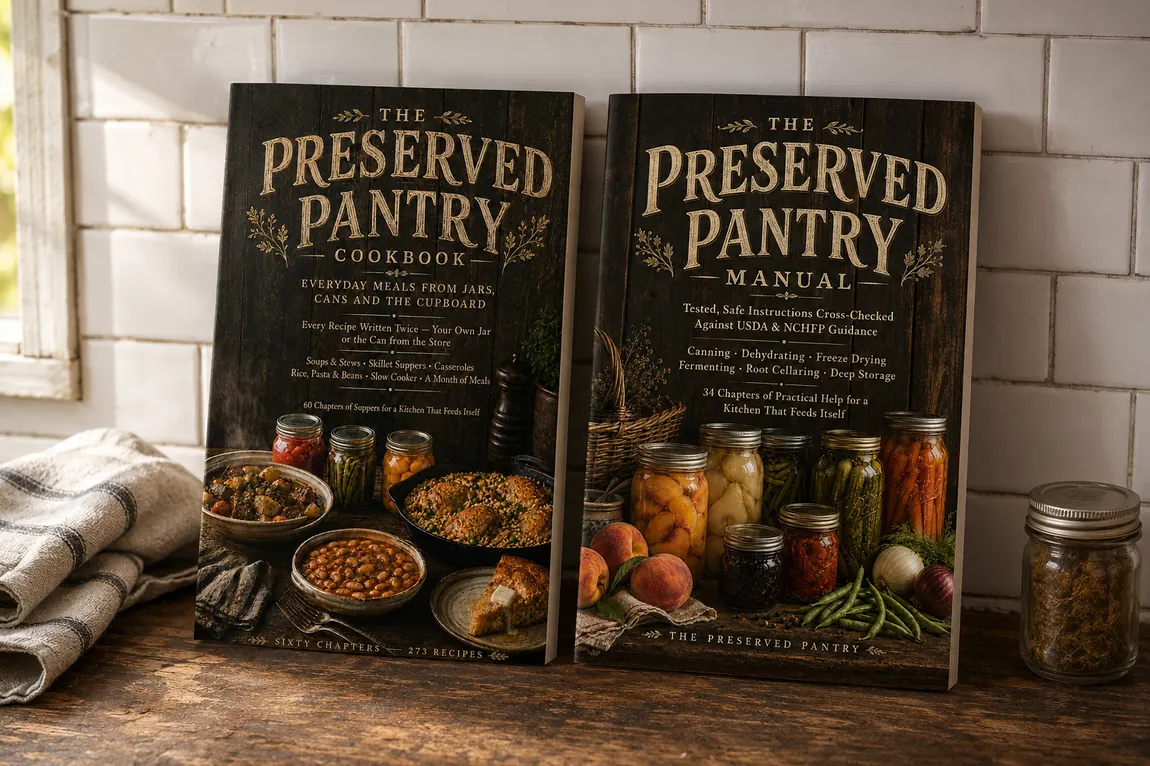
The Preserved Pantry Manual — book cover
CANNING · DEHYDRATING · FREEZE DRYING · FERMENTING · ROOT CELLARING · LONG-TERM STORAGE · CANNING · DEHYDRATING · FREEZE DRYING · FERMENTING · ROOT CELLARING · LONG-TERM STORAGE ·
Every Page, Illustrated

Eighty photographs.
Not a single stock image.

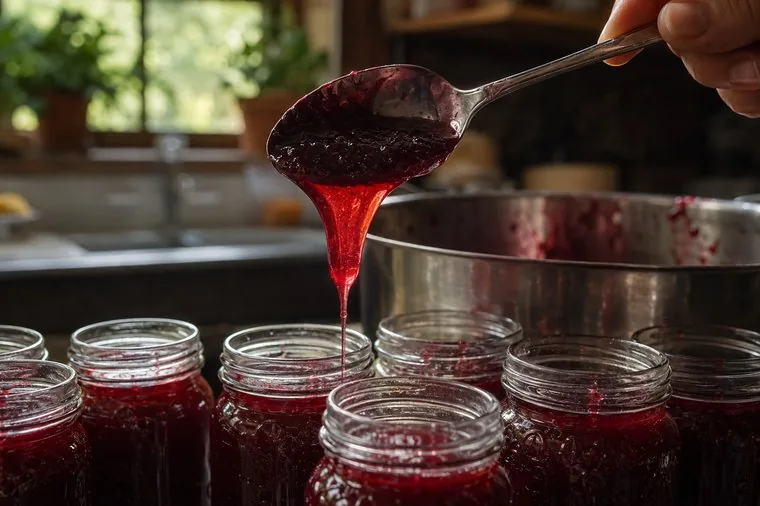
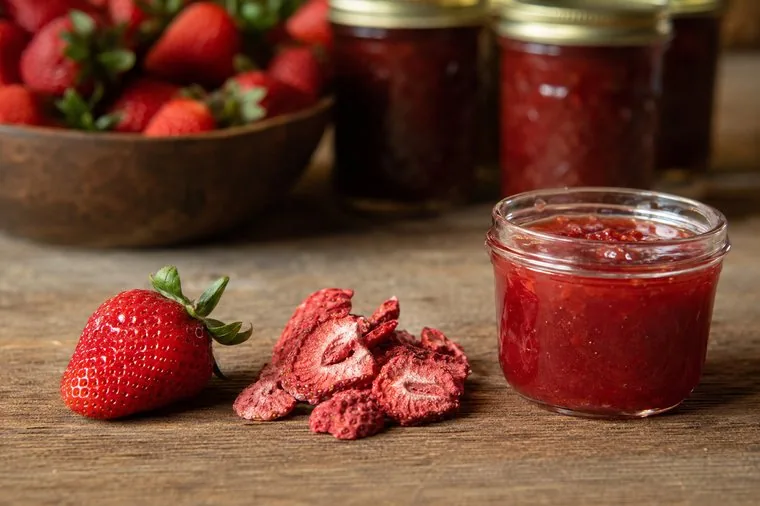
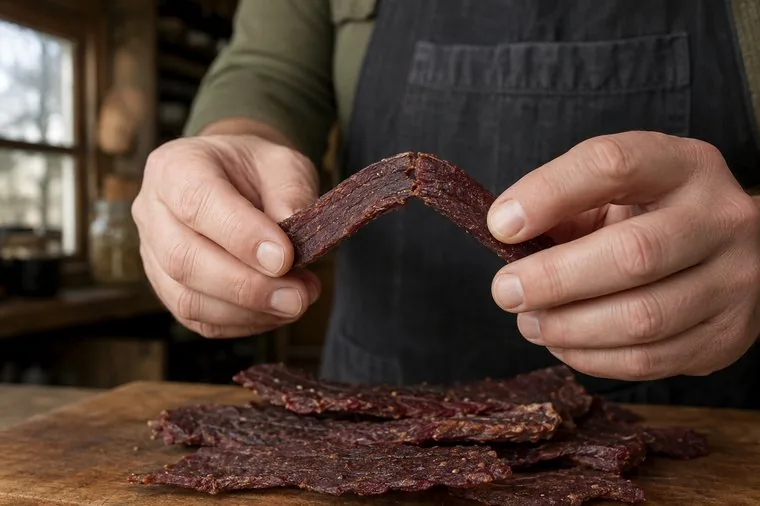
Every technique in this book is shown, not just described — the jam sheet test, the jerky bend test, a strawberry dried three different ways. If a page tells you what to look for, a photo shows you exactly that.

Everything In One Manual

Seven parts. One shelf.

You won’t need a second book for the next method.

Part One
FoundationsThe five methods, the safety rules, and the equipment worth your money.
Part Two
Food Storage & the Prepper PantryA real three-month pantry, built on calories, not marketing.
Part Three
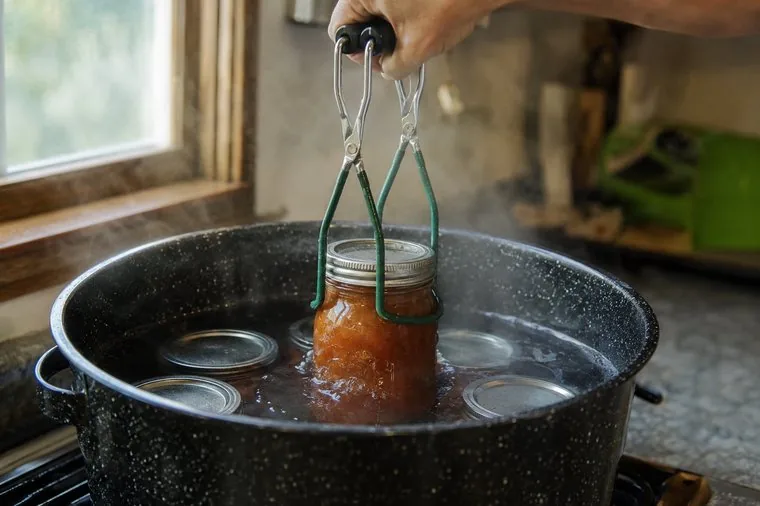
CanningWater bath and pressure, every USDA processing table you’ll need.
Part Four
DehydratingFruit, vegetables, and jerky done the safe way.
Part Five
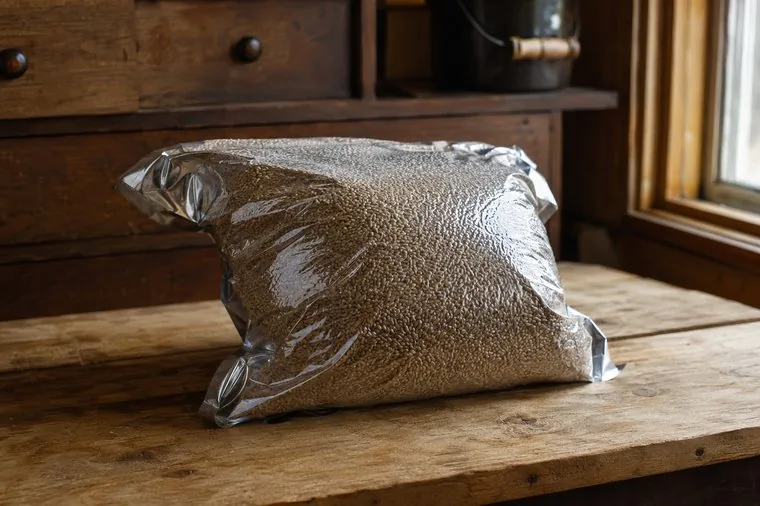
Freeze DryingThe honest math on whether a freeze dryer is worth it.
Part Six
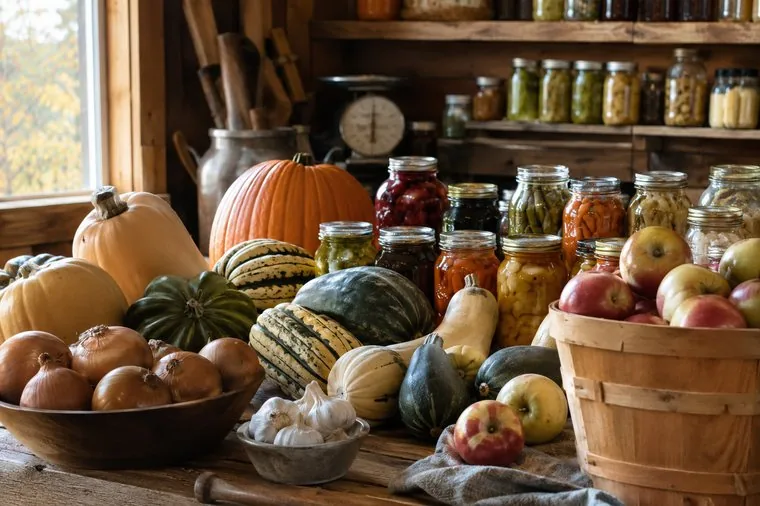
Fermenting, Root Cellaring & FreezingSalt, a cold corner, and a freezer — the three oldest methods.
Part Seven
The Kitchen & the Reference ShelfEvery chart in the book, plus a full keyword index.
Bonus
Printable Companion Pack38 working sheets bound into the back of the book — inventory, batch logs, altitude cards, seasonal charts.
A $12.99 VALUE — INCLUDED FREE

And 38 printable sheets
that turn the book into a system.

A manual tells you the processing time. A sheet on the cupboard door means you never have to go and look it up with wet hands and a canner already boiling. The complete Printable Companion Pack is bound into the back of the book — sized for US Letter, ready for a binder, a cupboard door, and a pencil.

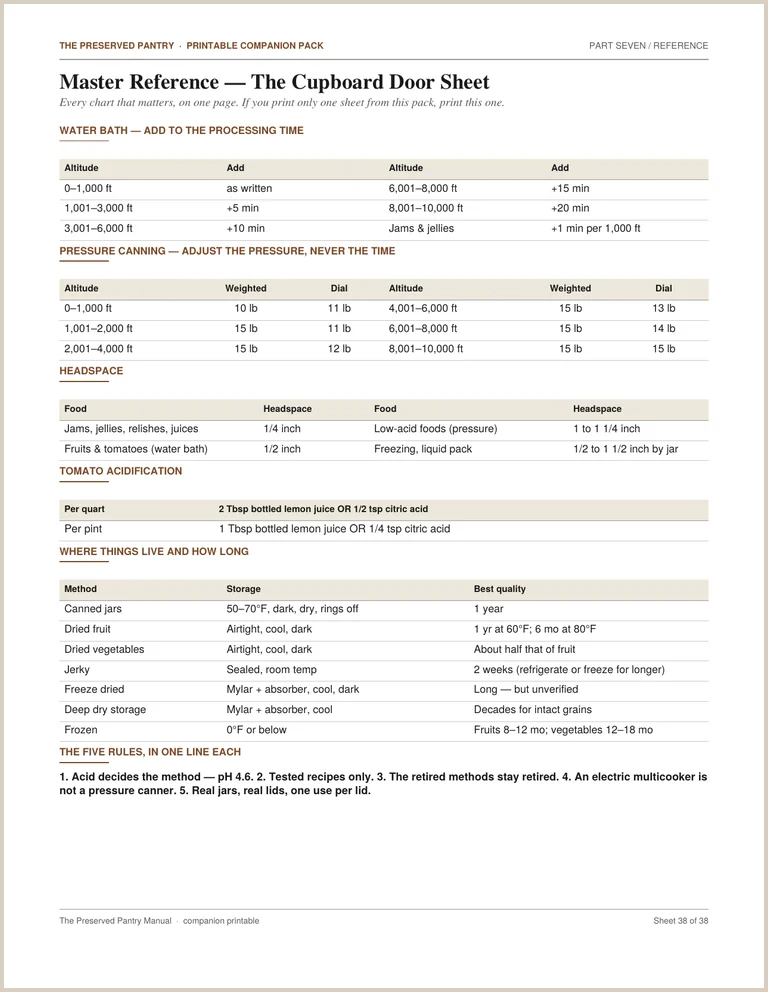
  • Master cupboard-door reference — every critical number on one page
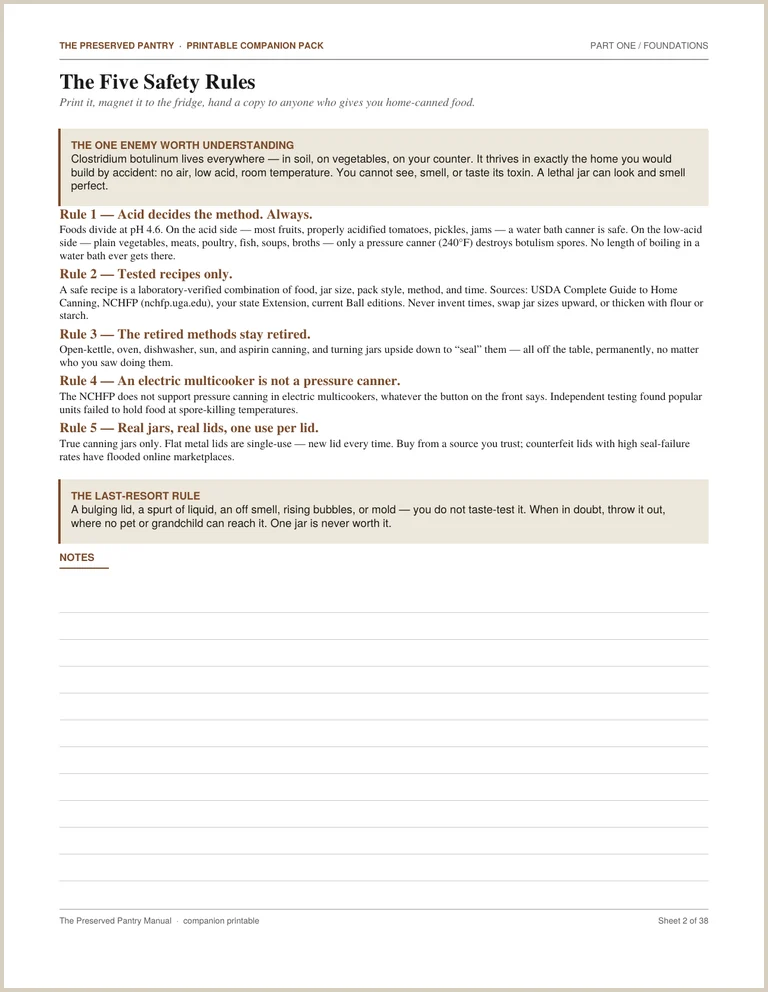
  • The five safety rules, one-pager
  • Water bath & pressure altitude cards
  • Processing times: tomatoes, pickles, vegetables, meat, broth
  • 3-month pantry quantity calculator
  • Pantry inventory & FIFO rotation trackers
  • The $150 starter shopping list
  • Shelf-life & oxygen-absorber charts
  • Cut-out bucket, bag & jar date labels
  • Canning batch log & farm-stand yield card
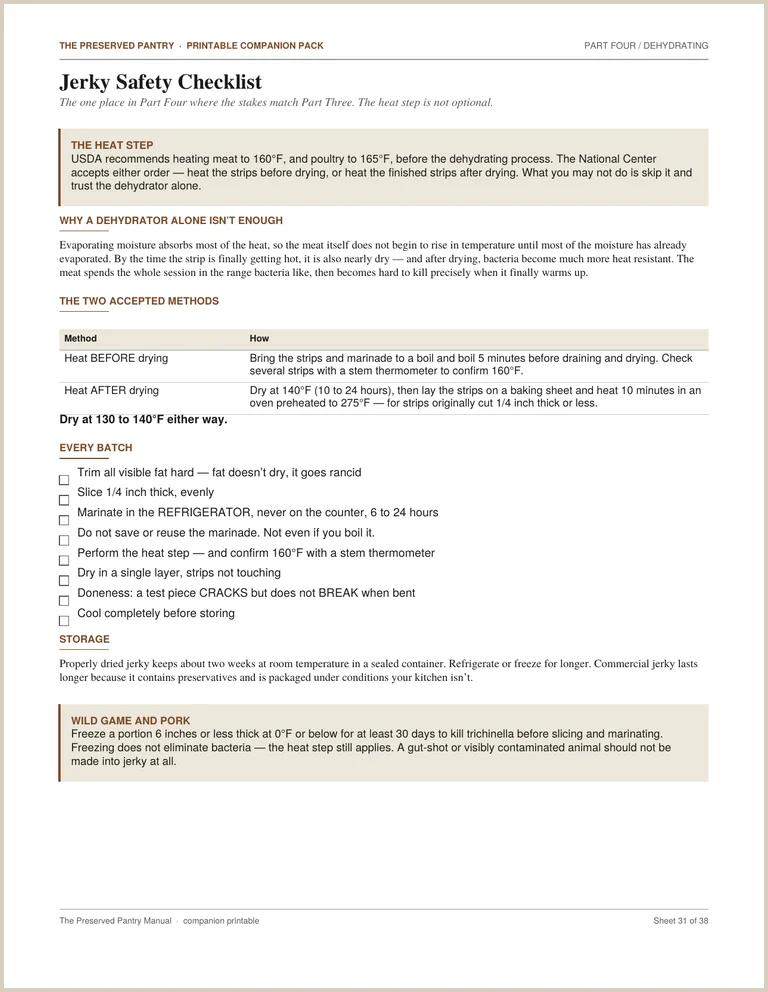
  • Dehydrator, blanching & jerky safety cards
  • Freeze-dryer cost-per-jar worksheet
  • Ferment brine ratios & root cellar charts
  • First-batch troubleshooting card

Nothing extra to download, nothing to lose — it is part of the same file, at the back of the book.

The Five Safety Rules printable sheet Master cupboard-door reference sheet with altitude and headspace charts Jerky safety checklist printable sheet
The Preserved Pantry — the author beside a full shelf of home-canned jars, holding the manual
Every method in the manual was worked out on these shelves before it was written down.
Who Stands Behind It
“Every processing time, every headspace measurement, every altitude adjustment in this book is cross-checked against USDA and NCHFP guidance — not scraped from a blog, not guessed by software.”
The Preserved Pantry

Most food preservation books today are one of two things: a decades-old reference that assumes you already know what a headspace is, or a cheaply produced modern guide padded with recipes nobody tested. This manual is neither — it's tested, sourced, and illustrated so you always know exactly what you're aiming for.

Jerky bend test
The How and the Why

Every method taught the way it should be — shown, not just told.

Photographs teach what words alone can’t: what “done” actually looks like.

  • The heat step that makes jerky safe, and how to check it
  • The bend test — cracks, but does not break
  • Full USDA storage and processing charts, every method
  • A complete keyword index for fast reference
Why This Book Exists

Every one of these was a real problem
before it was a chapter.

Six things that send people looking for a book like this — and where each one is answered.

The Fear of Getting It Wrong

You own a pressure canner and you have never once used it. The dial, the weight, the venting — every guide tells you the rules and none of them tell you why the rules exist. Chapter 2 explains the single organism all of it is built around. Chapter 15 walks the sequence start to finish, including the ten-minute vent that most people skip without knowing what it does.

Chapters 2 & 15
Three Books In, Still Confused

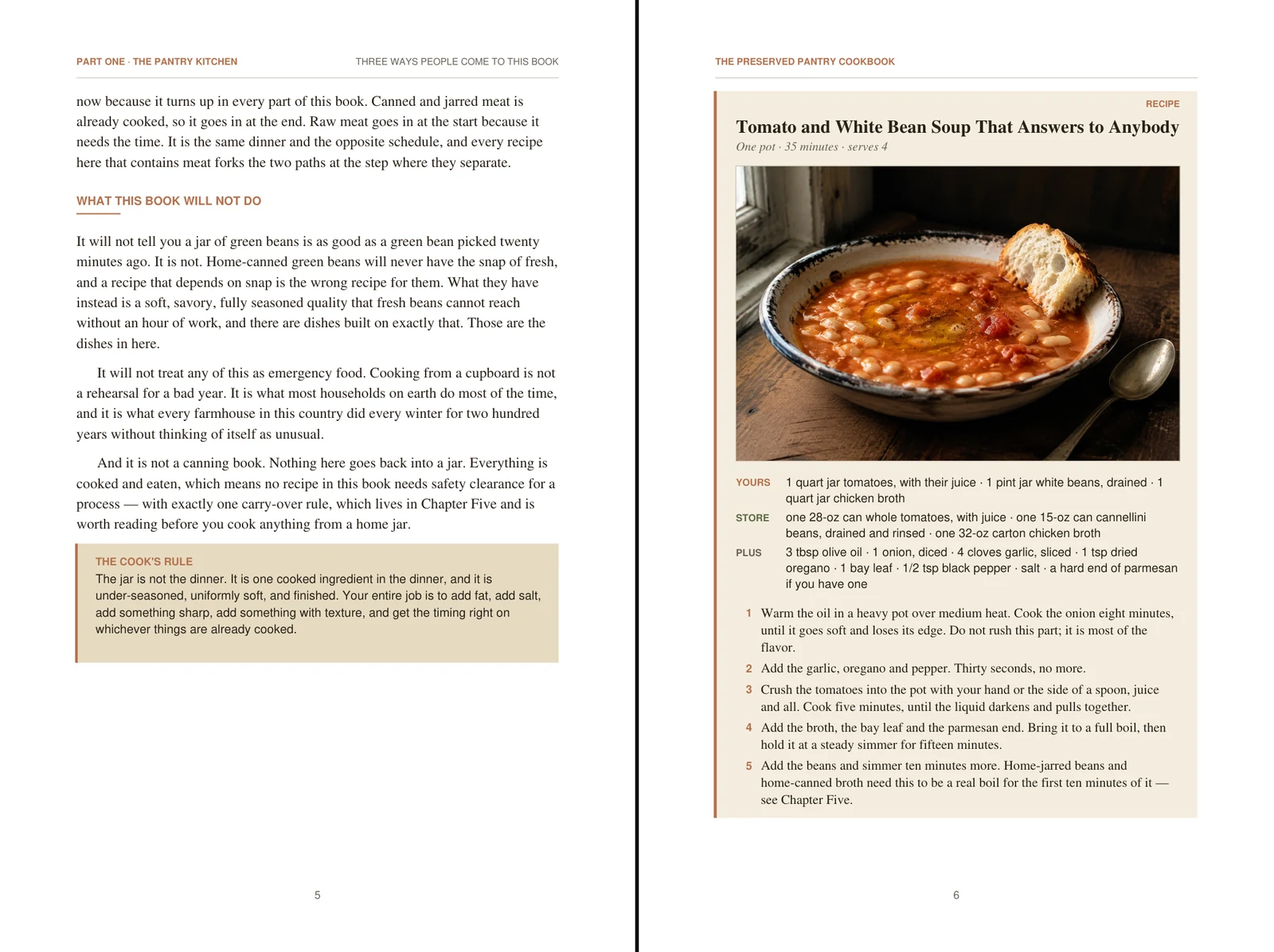
You have bought canning guides before. One had no pictures. One printed a recipe and forgot the processing time. Here every method is photographed — what the jam sheet looks like coming off the spoon, what a sealed lid looks like from the side, what jerky looks like at the moment it is done and not a minute past.

80 original photographs
The $3,000 Question

Somebody in the house wants a freeze dryer, and every number you can find comes from a company that sells them. Chapter 29 runs the arithmetic with nothing left out — machine, pump, bags, absorbers, and power — and the printable worksheet at the back lets you drop your own electricity rate in and see the real cost per jar.

Chapter 29 + cost-per-jar worksheet
Feeding Family, Not Guessing

You make jerky for lunches. The step that actually makes it safe is the one most guides leave out, and the reason it is necessary is a piece of physics nobody explains: the meat stays cool while it is still wet, then turns hard to sterilize at exactly the moment it finally warms up. Chapter 27 explains it, then gives you both accepted methods.

Chapter 27
Finally, a Batch That Sealed

Your first two batches failed to seal and you nearly gave up. Rim wiping, headspace, band tension, and the twenty-four-hour window in which a failed seal can still be saved. Chapter 16 covers all five ways a first batch goes wrong, and tells you plainly which are cosmetic and which are not.

Chapter 16
Keeping Grandma's Recipe, Safely

There is a card in a drawer in handwriting you recognize, and it never mentions acidifying the tomatoes. Chapter 22 draws the line between what you may change in an heirloom recipe and what you may never change, so the flavours survive and the risk does not.

Chapter 22
The Preserved Pantry kitchen — herbs, tomatoes and a jar of pickles on the counter
Tested, Not Generated

Every processing time in this book
came out of a real kitchen.

Not scraped from a blog. Not invented by software. Cooked, canned, dried, and checked against the USDA before it earned a page.

The Preserved Pantry Manual cover

Stock a pantry you can trust.

34 chapters. 80 photographs. 38 printable working sheets. Every method cross-checked against USDA guidance.

Instant digital download · PDF, readable on any device